Kegels Aren't the Whole Story: A Guide to Pelvic Floor Exercises
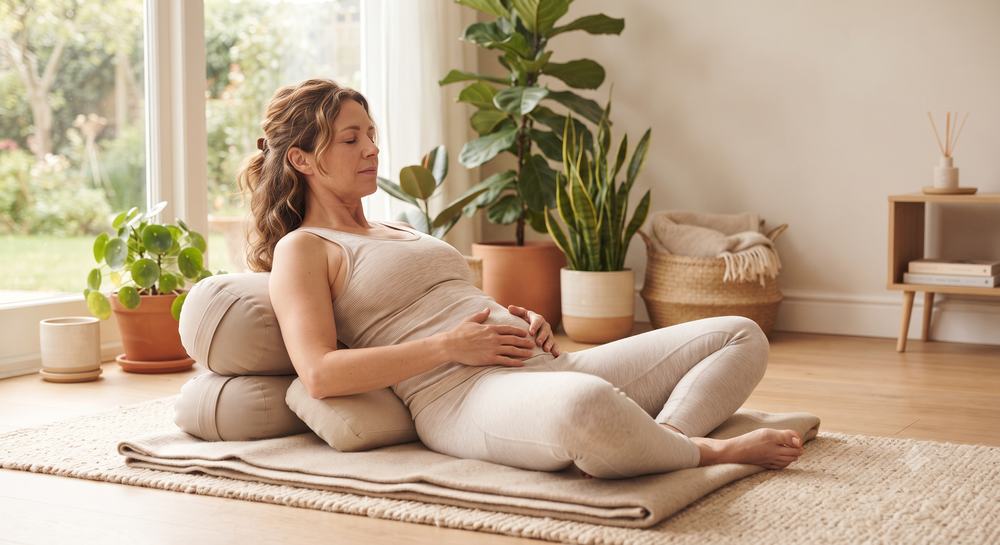
Most women have heard of Kegels. Far fewer have been shown how to do pelvic floor exercises correctly, and technique is the part that actually determines whether they work. This guide covers the full picture: how to find the right muscles, a step-by-step routine, common mistakes, and how long it realistically takes to see results.
What Pelvic Floor Exercises Actually Do
The pelvic floor is a group of muscles that support the bladder, uterus, and bowel, and that help control urination. Pelvic floor exercises strengthen these muscles so they respond faster and hold firmer under pressure, whether that pressure comes from a cough, a workout, or simply an overactive bladder signal firing too soon. If coughing is your main trigger, why you leak when you cough explains the mechanics behind it.
A widely cited 2021 review published in PMC found that pelvic floor muscle training reduces urinary incontinence episodes across multiple types of leakage, including stress and urge incontinence. This isn't a folk remedy. It's one of the most well-supported first-line approaches in clinical guidance for bladder control.
Step 1: Find the Right Muscles
Before starting any routine, you need to know which muscles you're working. Mayo Clinic's guidance suggests imagining you're trying to stop the flow of urine midstream, or trying to hold back gas. The muscles that tighten during that motion are your pelvic floor.
Don't actually practice by stopping urine flow regularly, since that can interfere with normal bladder emptying over time. Use it once, just to identify the muscles, then move your practice elsewhere.
Step 2: The Basic Contraction
Once you've identified the muscles, the basic pelvic floor exercise follows a simple pattern. Squeeze the pelvic floor muscles and hold for a count of three to five seconds. Release completely for the same count. Repeat for ten repetitions per set.
Keep your stomach, thighs, and buttocks relaxed throughout. A common error is tightening the abdomen or glutes instead of isolating the pelvic floor, which reduces how effective the exercise actually is.
Step 3: Build a Daily Routine
Consistency matters more than intensity here. MedlinePlus recommends working up to three sets of ten repetitions per day, spread across the day rather than done all at once. Morning, midday, and evening sets tend to be easier to remember than trying to do thirty in a row.
Pick cues that fit your life. Some women do a set while brushing their teeth, another during a commute, and a third before bed. Attaching the habit to something you already do daily makes it far more likely to stick.
Step 4: Progress the Exercise
As the muscles get stronger, increase the hold time gradually, working toward holds of eight to ten seconds. The NHS's guidance on stopping leaks recommends squeezing quickly without pulling in your stomach, holding for a few seconds, then fully relaxing before the next repetition, and increasing difficulty over time as the muscles adapt.
Adding quick, strong contractions, sometimes called "quick flicks," alongside your longer holds helps train the muscles to respond fast during sudden pressure, like a cough or sneeze, not just to hold steady over time.
Step 5: Track Your Results
Keep a simple log of leak frequency for a few weeks before you start, then continue logging as you build your routine. This gives you an honest before-and-after picture rather than relying on memory, which tends to underestimate slow, steady improvement.
If you're not noticing any change in technique after several weeks of consistent practice, that's a sign to get evaluated by a pelvic floor physical therapist rather than a sign the exercises don't work for you.
Beyond Kegels: Other Pelvic Floor Work
Kegels are the most familiar version of pelvic floor exercises, but they're not the only one. Biofeedback uses sensors to show real-time muscle activity, which helps women who are contracting the wrong muscles without realizing it. A pelvic floor physical therapist can also guide you through more advanced coordination work, since some bladder issues stem from muscles that don't relax properly, not just muscles that are too weak.
Bladder training, a separate but complementary practice, involves gradually increasing the time between bathroom trips to help the bladder hold more before signaling urgency. It is also a core part of overactive bladder treatment. Pairing bladder training with pelvic floor exercises tends to produce better results than either approach alone, and some women round out that routine with a daily supplement, such as FemiCore, formulated to support a healthy urinary microbiome alongside the muscle-strengthening work.
How Long Results Actually Take
Patience matters here. Most clinical guidance points to six to twelve weeks of consistent practice before noticeable improvement in bladder control. Some women feel small changes sooner, but meaningful, lasting improvement takes a real, sustained routine, not a week of enthusiastic effort followed by stopping.
If you're not seeing progress after three months of correct, consistent practice, it's worth talking to a doctor or pelvic floor physical therapist about next steps. Our overview of physical therapy for bladder leaks explains what those sessions actually involve.
Common Mistakes and Myths
The most common mistake is poor technique, contracting the wrong muscles without realizing it. This is extremely common, and it's part of why some women say Kegels "don't work" for them. A pelvic floor physical therapist can confirm correct form in a single visit.
A related myth: that more is always better. Overdoing pelvic floor exercises, especially without proper relaxation between contractions, can actually tighten the muscles too much, which sometimes makes urgency and discomfort worse rather than better.
A third myth is that pelvic floor exercises only help stress incontinence. Clinical research shows they also help with urge-related leakage and overactive bladder symptoms, since a stronger, more responsive pelvic floor supports overall bladder control, not just leak prevention during a cough or sneeze.
What Actually Helps
A consistent, correctly performed pelvic floor exercise routine is one of the most effective, lowest-risk tools for improving bladder control. Give it real time, six to twelve weeks at minimum, before judging results, and get your technique checked if you're unsure.
Alongside the exercises themselves, daily habits support the same goal. Managing fluid intake, reducing bladder irritants like caffeine, and maintaining a healthy weight all reduce pressure on the pelvic floor. Some women also add a daily supplement to that routine. FemiCore is formulated with cranberry extract, targeted botanicals, and a five-strain probiotic blend, designed to support a healthy urinary microbiome and everyday bladder comfort. See how FemiCore pairs with a pelvic floor routine as part of a broader approach to bladder health. Talk to your doctor before starting anything new, especially if you're pregnant, nursing, or managing a medical condition.
FAQ
What is the 7 second bladder reset method?
This refers to a pelvic floor contraction technique where you squeeze and hold for about seven seconds before fully relaxing, used as part of a broader pelvic floor exercise routine to build strength and control gradually.
How can I train myself to hold my bladder longer?
Bladder training, which involves gradually increasing the time between bathroom trips, paired with consistent pelvic floor exercises, is the standard approach clinicians recommend for improving how long you can comfortably hold urine.
How long does it take to strengthen your bladder with Kegels?
Most guidance points to six to twelve weeks of consistent, correctly performed pelvic floor exercises before noticeable improvement. Results vary by individual and depend heavily on proper technique.
Is it possible to regain bladder control?
Yes, for many women, especially with consistent pelvic floor exercises, bladder training, and lifestyle changes. Severity and underlying causes vary, so results differ, and a doctor or pelvic floor physical therapist can help set realistic expectations for your specific situation.

Pair the exercises with daily bladder support
FemiCore is formulated with cranberry extract, targeted botanicals, and a five-strain probiotic blend to support a healthy urinary microbiome and everyday comfort.
Visit the Official FemiCore SiteSources
Mayo Clinic, "Kegel exercises: A how-to guide for women" (2024) · MedlinePlus, "Pelvic floor exercises" (2025) · Cho, S.T. et al., PMC8743604 (2021) · NHS, "10 ways to stop leaks" · National Association For Continence
This article is for informational purposes only and is not intended as medical advice. Consult your physician before starting any new exercise routine or supplement, especially if you are pregnant, nursing, or managing a medical condition. These statements have not been evaluated by the Food and Drug Administration. This product is not intended to diagnose, treat, cure, or prevent any disease. This page contains affiliate links; we may earn a commission at no extra cost to you.